Plagiarism Checker
Detect text similarity instantly using n-gram shingling and Jaccard similarity. 100% client-side — no data leaves your browser. Free plagiarism checker tool.
All computation is done locally in your browser. No data is sent to any server.
Enter texts to check
Paste or type a source text and a comparison text, then click Check plagiarism. Results appear instantly with no data sent anywhere.
Understanding Plagiarism Checker Similarity Scores
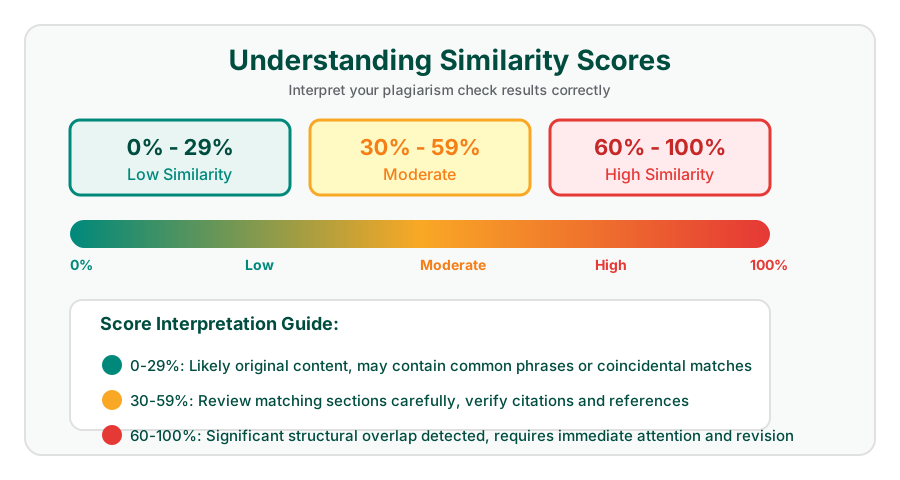
When you use this free plagiarism checker, the similarity score reveals how much overlapping text structure exists between two documents. Understanding what 0% to 100% means helps you interpret results correctly and make informed decisions about your content.
What Does Each Similarity Percentage Mean
0% similarity indicates the algorithm found no matching n-gram shingles between your texts. This suggests the content is structurally distinct. However, zero overlap does not guarantee originality of ideas — heavily paraphrased text can score low while still borrowing concepts from other sources.
1-29% similarity indicates low overlap. Common phrases, standard expressions, or coincidental word choice may account for this range. Review the top matching phrase to see exactly what triggered the score.
30-59% similarity suggests moderate structural overlap. This range warrants attention — particularly if matching passages appear in key sections like introduction or conclusion.
60-100% similarity signals substantial matching content. High scores often indicate copied or near-copied text. The top matching phrase and technical details help you locate and verify the overlap.
How N-Gram Shingling Algorithm Works
This text similarity tool uses two established algorithms: n-gram shingling and Jaccard similarity. Understanding these concepts helps you interpret results more accurately and understand the tool's capabilities and limitations.
N-Gram Shingling Explained
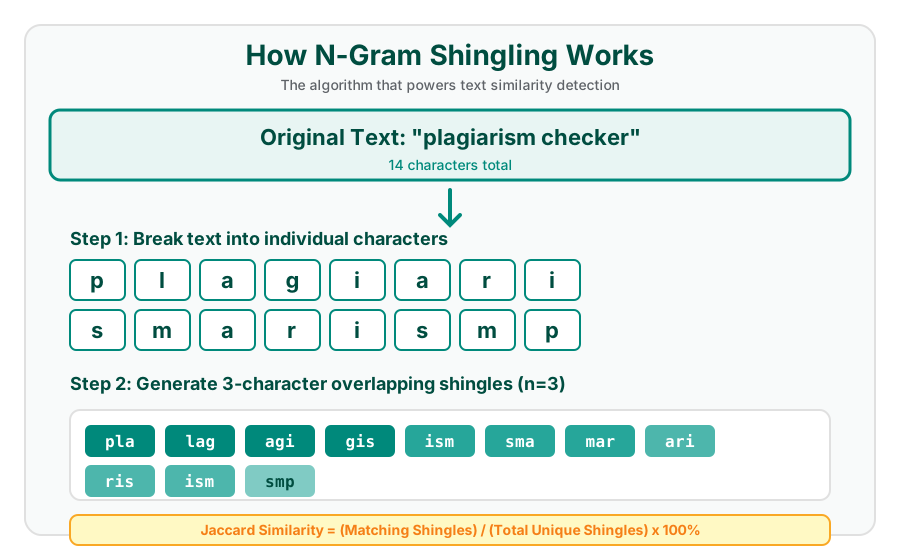
N-gram shingling breaks text into overlapping substrings of n consecutive characters. For example, the phrase "plagiarism checker" with n=3 produces these shingles: "pla", "lag", "agi", "gis", "ism", "sm ", "m c", " ch", "che", "hek", "eck", "cke", "ker". Each shingle is hashed, and the set represents the document's unique fingerprint.
The algorithm adapts shingle size based on text length. Shorter texts use 3-character shingles for maximum sensitivity. Longer texts use 5-6 character shingles to capture longer distinctive phrases and reduce false matches from common short substrings.
Jaccard Similarity Calculation
Jaccard similarity compares two sets of shingles by measuring their intersection divided by union. If both documents share half their shingles, the score is 50%. If they share all shingles (identical text), the score reaches 100%.
Running multiple shingle sizes (3 through 6) and taking the maximum score produces more robust results. Short n-grams catch near-verbatim matches while longer n-grams distinguish paraphrasing from genuine originality.
Practical Plagiarism Checker Use Cases
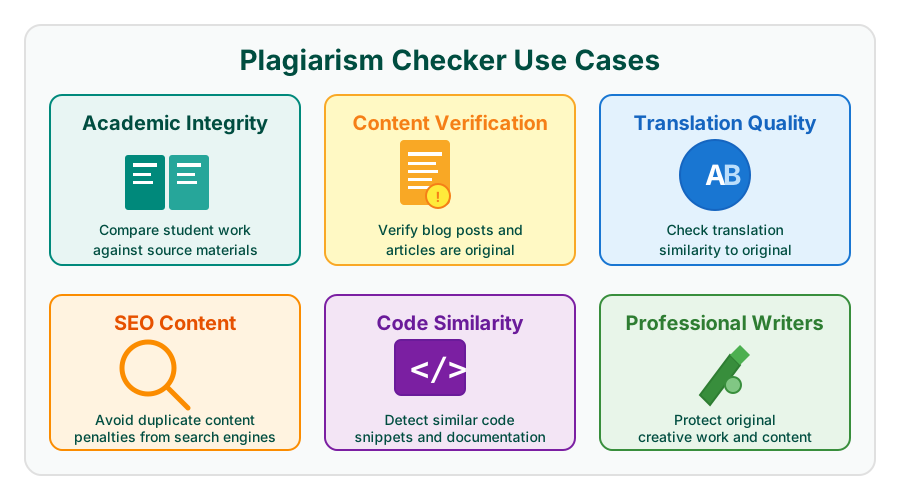
This free online plagiarism checker serves writers, educators, students, and content professionals. Here are common scenarios where this tool adds significant value to your workflow.
Academic Integrity Review
Educators can quickly compare student submissions against source materials or previous essays. While not a replacement for dedicated academic plagiarism services, it surfaces obvious duplication that warrants discussion with students about proper citation practices.
Content Originality Verification
Content writers and marketers can verify that articles, blog posts, or marketing copy do not inadvertently reproduce existing published content. This helps avoid SEO penalties for duplicate content and maintains credibility with your audience. Pair this with our keyword density checker for comprehensive content optimization.
Text Comparison for Editing
When editing documents or comparing versions, use our text compare tool for detailed character-level diff highlighting. This provides a different perspective on text similarity that complements the n-gram approach.
Translation Quality Assessment
High similarity between source and translated text may indicate poor translation quality or over-reliance on machine translation without proper editing. Check your translations against originals using this plagiarism detector to ensure proper adaptation.
Plagiarism Checker Limitations
Transparency about limitations helps you use this plagiarism detector appropriately and avoid misinterpreting results. Understanding what the tool can and cannot detect ensures you apply it effectively.
Paraphrasing Detection Limits
This tool detects structural similarity, not semantic meaning. Heavily paraphrased content — where someone rewrites ideas using different words — can score low even when the underlying concepts come from another source. Sophisticated paraphrasing escapes n-gram detection.
Idea Plagiarism Detection
Concept theft and idea borrowing do not leave textual fingerprints. Two articles with completely different wording can express the same ideas. This tool cannot detect that form of plagiarism, which requires human review and domain expertise.
Cross-Language Similarity
The algorithm compares character-level patterns. Translated content from another language produces completely different character sequences, so similarity between original and translation will be low even for direct word-for-word copies.
Common Phrases and Boilerplate
Standard phrases, legal disclaimers, and templated text produce natural similarity between unrelated documents. A similarity score of 10-20% from boilerplate content is normal and does not indicate problematic copying.
How to Improve Content Originality
After using this plagiarism checker tool, consider these steps to enhance your content's uniqueness and value to readers.
- Add unique insights — Share personal experiences, original research, or expert opinions that cannot be found elsewhere.
- Use proper citations — When referencing others' work, cite sources properly and paraphrase in your own voice.
- Structure content differently — Organize information in unique ways that reflect your understanding and audience's needs.
- Add value through analysis — Interpret, analyze, and synthesize information rather than simply reporting facts.
Related Tools
Explore these complementary tools to support your content creation and analysis workflow:
- Word Counter — Track word count, character count, and reading time before publishing or submitting content.
- Text Compare — Side-by-side comparison with character-level diff highlighting for precise editing.
- Case Converter — Normalize text case before comparison to reduce false differences from capitalization.
- Keyword Density Checker — Analyze keyword usage in your content for SEO optimization alongside originality verification.
- Character Counter — Count characters with and without spaces for precise text analysis.
- All Text Tools — Browse our complete collection of content creation and analysis utilities.